Description
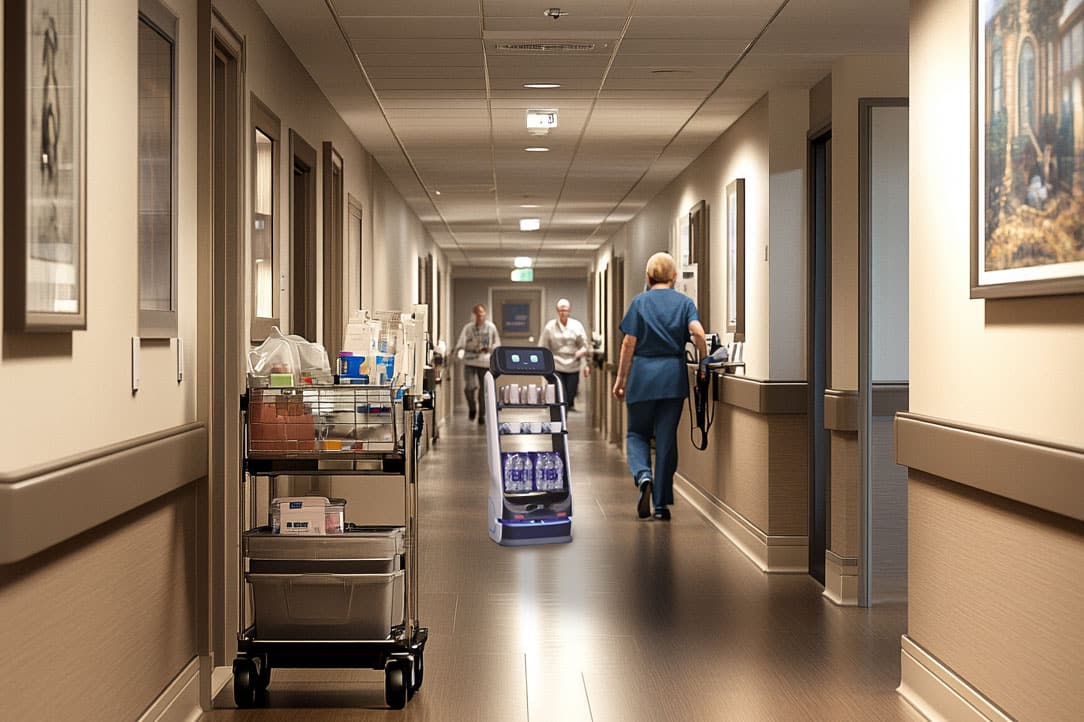
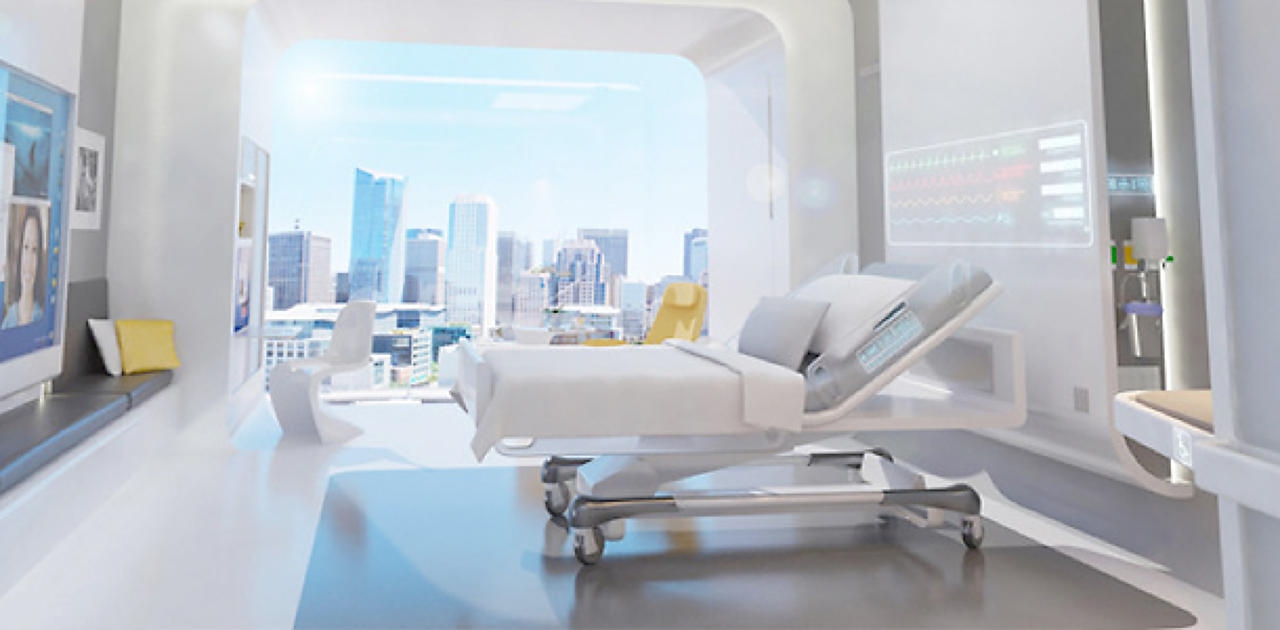
The integration of robots into the hospitals,is no longer a science fiction scenario, but a reality aimed at releasing staff from repetitive tasks so they can focus on essential hospitality.
The following are the key areas where a robot can provide services:
Hospital robots in 2026 have evolved from simple experimental tools into critical partners that save time and lives. Their work is divided into three main pillars: the supply chain (logistics), direct care, and operations.
The following are their main responsibilities:
1. Supply Chain & Transport (Logistics)
This is the area with the highest robot usage (such as the Grobots W3 we saw in hotels, but adapted for medical use).
Medicine Transport: Autonomous transport of controlled substances or expensive medications from the pharmacy to the wards, with secure compartments that unlock only with a nurse’s card.
Laboratory Samples: Rapid transport of blood samples or biopsies from clinics to labs, without waiting for a porter.
Food & Linens: Distribution of meals to hundreds of rooms and collection of soiled linens, reducing the kilometers walked by staff.
2. Hygiene & Disinfection
UV-C Robots: Use powerful ultraviolet radiation to disinfect an operating room or a ward in minutes, exterminating 99.9% of germs (such as the GRobots UBTech ADIBOT).
Autonomous Cleaning: Robots that mop and disinfect corridors 24/7, maintaining consistently high hygiene levels.
3. Nurse & Patient Support
Triage & Reception: Robots (such as the Grobots Cruzr) at the ER entrance that guide patients or perform initial temperature checks and symptom logging.
Telepresence: Allow doctors to conduct “visits” remotely, speaking with the patient via screen and checking vital organs, even if the doctor is in another city.
Psychological Support: Small interaction robots in pediatric wards that help children relax before a procedure.
4. Rehabilitation
Robotic Systems perform operations with millimeter precision through small incisions, reducing recovery time.
Exoskeletons: Robotic devices worn by patients in physical therapy to relearn how to walk after a stroke or injury.
Benefits in Numbers
According to data from hospitals using robots like Moxi, a pair of robots can make over 1,800 deliveries per month, saving staff approximately 2 million steps.
In summary: Robots in the hospital do not replace the doctor or nurse, but take over the “boring” and tiring tasks (transport, cleaning) so that humans have time to offer essential care to the patient.
For the hospital environment of 2026, Grobots have developed specialized models covering the full range of needs, from disinfection to medicine transport.
The following is an analytical guide with the appropriate models per task:
1. Medicine & Sample Transport (Medical Logistics)
Security, hygiene, and elevator-use capability are required here.
Please see below for a presentation of our entire product range, including dedicated videos for each product and its respective use.
1. Cleanbot CC201
Professional Overview
The Cleanbot CC201 is an industrial-grade, fully autonomous facility maintenance robot engineered for high-traffic commercial environments. Integrating state-of-the-art LiDAR arrays, 3D depth cameras, and advanced SLAM (Simultaneous Localization and Mapping) algorithms, the CC201 delivers precision floor-care (scrubbing, sweeping, and mopping) with zero human intervention. Featuring intelligent fluid management and adaptive brush pressure control, it dynamically adjusts to various floor types while flawlessly navigating around static and dynamic obstacles.
Value Proposition & Commercial Application
Operational Efficiency: Reduces overhead and labor costs by automating routine, large-scale cleaning cycles.
24/7 Deployment: Can be scheduled for overnight or off-peak operations to ensure pristine facility standards by morning.
Key Sectors: International airports, transit hubs, mega-malls, healthcare facilities, and corporate headquarters.https://www.youtube.com/watch?v=PdSQODTEl_s
2. CADEBOT L100
Professional Overview
The CADEBOT L100 is a next-generation autonomous delivery and service robot purpose-built for the hospitality and service industries. Equipped with multi-tiered, weight-sensitive trays and a highly stable multi-link suspension system, it guarantees the secure transport of items, including delicate dishes and liquids. Driven by proprietary AI visual recognition and natural language processing (NLP), the L100 effortlessly interacts with customers, avoids tight bottlenecks in real-time, and optimizes indoor logistics paths.
Value Proposition & Commercial Application
Staff Augmentation: Assumes heavy, repetitive lifting tasks, allowing front-of-house staff to focus entirely on premium guest engagement.
Enhanced Table Turnover: Accelerates food running and table clearing in high-volume dining environments.
Key Sectors: High-capacity restaurants, luxury hotels (room service/lobby distribution), and convention centers.https://www.youtube.com/watch?v=YZB7kwwo4aI
3. Cruzr S2
Professional Overview
The Cruzr S2 by UBTECH is an enterprise-class, cloud-based humanoid service robot designed to revolutionize customer reception and brand interaction. Featuring multi-axis flexible robotic arms for natural gesturing, an integrated HD touchscreen, and advanced facial recognition, the Cruzr S2 delivers highly personalized customer journeys. Operating on a secure cloud network, it seamlessly processes complex inquiries, handles automated check-ins, and broadcasts promotional material while autonomously guiding visitors through large premises.
Value Proposition & Commercial Application
Brand Elevating UX: Offers an innovative, tech-forward first impression that boosts customer engagement and data collection.
Information Automation: Relieves front-desk congestion by handling repetitive ticketing, queuing, and navigation inquiries.
Key Sectors: Banking institutions, retail flagships, corporate lobbies, and government service centers.https://www.youtube.com/watch?v=9kLt-ElGazQ
4. Walker
Professional Overview
The Walker by UBTECH represents the pinnacle of bipedal humanoid robotics. Engineered with high-torque, proprietary servo actuators and advanced dynamic balance control, Walker replicates human-like locomotion, enabling it to navigate uneven terrains, conquer stairs, and withstand external physical impacts. Utilizing multi-modal physical AI, its dual robotic hands feature integrated force/tactile sensors, granting it the dexterity required to manipulate fragile real-world objects, operate household fixtures, and execute delicate tasks.
Value Proposition & Commercial Application
Advanced R&D Platform: Serves as a premier flagship system for top-tier academic institutions and corporate AI labs studying human-robot interaction (HRI).
Future-Proof Automation: Acts as the blueprint for high-end domestic assistance and intricate industrial support.
Key Sectors: Artificial Intelligence research facilities, aerospace/defense automation, and elite tech showcases.https://www.youtube.com/watch?v=4ZL3LgdKNbw
5. Autonomous Logistics & Warehouse Robots (AMRs/AGVs)UBTECH Walker S2
Professional Overview
This suite of Autonomous Mobile Robots (AMRs) and Automated Guided Vehicles (AGVs) forms the infrastructure of modern smart warehousing. Utilizing a hybrid navigation matrix (Visual SLAM, LiDAR, and matrix QR coding), these heavy-duty platforms transport variable payload capacities with millimeter precision. Managed by a centralized Fleet Management System (FMS), they communicate peer-to-peer to eliminate traffic bottlenecks, optimize path planning, and automatically return to charging docks to maintain a continuous operational cycle.
Value Proposition & Commercial Application
Supply Chain Optimization: Drastically reduces fulfillment times and eliminates human error in inventory sorting and transport.
Workspace Safety: Minimizes forklift-related accidents by replacing manual material handling in hazardous or high-velocity zones.
Key Sectors: E-commerce fulfillment hubs, automotive assembly lines, and global manufacturing plants.https://www.youtube.com/watch?v=Rbctqrmcco8
6. This Is the Most Beautiful Bionic Robot Ever Made UBTECH U1,Companion (The Ultra-Realistic Humanoid)
Professional Overview
The Companion Robot is an advanced social humanoid driven by Emotional Artificial Intelligence (Emotional AI). Layered with life-like silicone aesthetics and micro-actuators capable of micro-expressions (empathy, joy, attentiveness), it is designed purely for psychological, cognitive, and conversational engagement. By processing vocal inflections, facial cues, and user sentiment, it delivers contextualized, natural conversations tailored to the emotional state of the user.
Value Proposition & Commercial Application
Mental Wellness Support: Mitigates the effects of isolation through continuous cognitive stimulation and interactive companionship.
Bespoke Entertainment: Delivers interactive storytelling, news curation, and gamified cognitive exercises.
Key Sectors: Premium wellness retreats, private elder-care estates, and specialized psychological research projects.https://www.youtube.com/watch?v=pZjy90pKt0Q
7. UBTECH Una (Human Hospitality Hospital Solution)
Professional Overview
The UBTECH Una is a modular, medical-grade robotic platform engineered specifically to optimize healthcare workflows and clinical hospitality. Designed to meet strict sanitary standards, Una can be configured with secure medical payload bays, specialized UV-C sanitization arrays, or thermal scanning telemetry. Its autonomous navigation architecture is fine-tuned to prioritize patient right-of-way, moving safely through bustling hospital corridors to distribute materials or screen incoming visitors.
Value Proposition & Commercial Application
Risk Mitigation: Prevents cross-contamination and nosocomial infections through automated, deep UV-C sanitization.
Clinical Asset Optimization: Offloads logistical tasks (delivering lab samples, linens, or medication) from nursing staff, maximizing their time for critical patient care.
Key Sectors: Public and private hospitals, outpatient clinics, and quarantine facilities.
8. UBTECH Welli (The Elder-Care Companion)
Professional Overview
The UBTECH Welli is a dedicated assistive care robot designed to support aging populations and independent senior living. It fuses proactive health monitoring (AI-driven fall detection, vitals tracking integration) with lifestyle management. Welli acts as an intuitive bridge between the user, their medical providers, and their families, offering automated medication reminders, simplified telehealth portals, and physical/cognitive wellness tracking.
Value Proposition & Commercial Application
Independent Living Enablement: Provides peace of mind to families by serving as a non-intrusive, 24/7 safeguard for senior relatives.
Institutional Efficiency: Assists assisted-living staff by monitoring resident activity patterns and flagging emergencies immediately.
Key Sectors: Senior living communities, geriatric care facilities, and home healthcare providers.
Dear Partners,
Manufacturing & Support Terms Agreement
Parties: The Factory (Manufacturer) and ORAIA LLC (grobots.us) (US Distributor).
This document establishes the official operational and technical terms governing purchase orders for the US market. The following terms have been structured to ensure absolute commercial clarity, compliance with US market regulations, and the mutual protection of both parties.
1. Software & Region Locking
US Market Unlock: The factory explicitly guarantees that all shipped units will be completely and permanently unlocked for the US region (No region-lock), ensuring seamless operation on US networks.
Cloud Platform Access & SLAM Navigation: Standard SLAM navigation and Cloud Platform access are included at no extra cost and remain free for lifetime (Free for Lifetime) for all units deployed by ORAIA LLC in the US market, ensuring strict alignment with commercial commitments made to end-users.
Advanced API Integrations: For advanced features—specifically autonomous elevator integration (smart elevator calling via API)—the factory will provide the necessary API licenses and comprehensive technical documentation at no additional cost, under the agreed terms.
2. Local Deployment, Training & Software Integration
Technical Autonomy: As the authorized distributor, ORAIA LLC (or the end-user’s internal IT/Engineering departments) will handle the on-site SLAM navigation mapping, environment programming, and initial software integration.
Deployment Training & Support: ORAIA LLC will provide the necessary technical training and IT support to its clients during deployment. This training is included in the initial pricing and is provided free of charge after the products are received.
Factory Backup (Tier-2 Remote Support): The factory is required to provide secondary, specialized remote IT support to ORAIA LLC’s engineers if requested during deployment or for troubleshooting complex software errors.
3. Warranty Terms, Spare Parts & Product Liability
24-Month Parts Warranty: The factory provides a full 24-month warranty covering all hardware components and spare parts from the date of delivery.
Replacement Procedure (RMA) & CIF Terms: In the event of a hardware malfunction within the warranty period, the factory is obligated to ship the replacement component free of charge under CIF (Cost, Insurance, and Freight) terms to ORAIA LLC’s main warehouse in the US, absorbing all freight and insurance costs to the port of entry. ORAIA LLC or the end-user will return the defective component to the factory (if requested) in accordance with approved RMA procedures.
Technical Risk Allocation & Repairs: As the factory does not dispatch field technicians to the US, ORAIA LLC’s local certified technicians (or authorized partners) will execute the physical repairs and replacements in the field, ensuring compliance with local safety standards.
Regulatory Compliance & Certifications: The factory guarantees that all hardware and wireless components (Wi-Fi, 4G/5G, LiDAR) carry the necessary FCC certifications and meet the required safety standards for legal commercial distribution and operation within the United States.
4. Commercial Framework & Jurisdiction
These manufacturing terms directly align with the purchase orders and business model of ORAIA LLC (grobots.us), allowing it to efficiently manage local US logistics, import customs clearance, and the On-Site Technical Support SLA offered to its US clients.
Please reply to this email to confirm your official acknowledgment and acceptance of these revised terms, as they form the operational and legal foundation of our upcoming purchase orders.
Reviews
There are no reviews yet.